Monday, 11 October 2010

Farmville coming to mobile?

The leading games developer for Facebook, Zynga, has recently bought German HTML5 specialist Dextrose AG. So what does that mean? Well they will be able to run rich programmes on both web and mobile browsers. This could save Zynga lots of development time and effort, and broaden its channels to market by bringing it games to mobile and other devices.

Facebook games generally rely on Adobe Flash, which is only supported on a few phones running Android 2.2, but most including the latest iPhones do not support it. This means that you can't harvest your crops, or check on your Mafia on your mobile. This acquisition should allow Zynga to port games to the emerging standard HTML5, which will support a greater range of mobile devices, while still offering a rich user experience. This could see even more mobile Internet traffic for the already dominant Facebook.

Monday, 4 October 2010

Who is winning the browser war?

Looking at the statistics provided by comScore MobiLens (July 2010), one can see that while the iPhone is a large slice of the browsers at 29.6%, Nokia (using the Symbian OS) is still delivers the largest slice of mobile internet traffic at 37.3.


Also of note is the rapid growth of Android, already at 10% in July nearly doubling from a year earlier, I think that by year end it will have increases substantially due to new handset releases.

What is also noteworthy is the huge differences between some countries in Europe, here Nokia remains much more dominant. This should be remembered when working with clients who's users are across Europe.


Monday, 27 September 2010

Going Mobile on the Underground?

Boris Johnson, London Mayor, has stepped in the protracted discussions to provide mobile phone coverage on the underground in time for the 2012 London Olympics.


The operators had complained that they would not see any ROI for building the necessary infrastructure. Boris has apparently twisted appropriate arms, and we will now see Vodafone, O2, Orange, T-Mobile and 3 bearing the £100 million, or more, costs.

The plan is to deploy transmitters threaded along the roof of the London Underground's 112 miles of tunnels, with antennas placed at the end of each train carriage.

Boris has informed the five operators that he wants to see the entire Underground with coverage by the time of the games, and that the project should be funded by all the mobile operators, as against raising tube fares or sourcing money through taxpayers.

Monday, 20 September 2010

BBM, the new kid on the block.

Blackberry Messenger, otherwise known as BBM, is known to many as a chat tool for kids – but are marketers and companies missing it’s true potential?

Lets start with briefly running through the key features of BBM. The main benefit is that it provides a FREE service globally (excluding roaming charges) for unlimited character text messages, picture messages, and voice notes, with real-time confirmation when messages are delivered and read. And there are quirky features, including the option to allow friends to see what music you are currently listening to...

You can personalise your profile by choosing your own user name and adding a photo and selectively add friends by typing in their ‘PIN’ or scanning their personal QR code. BBM then allows you to create ‘categories’ to help organise your friend list or ‘groups’ for specific friends to engage privately. You can then broadcast messages to everyone or these specific categories/ group.

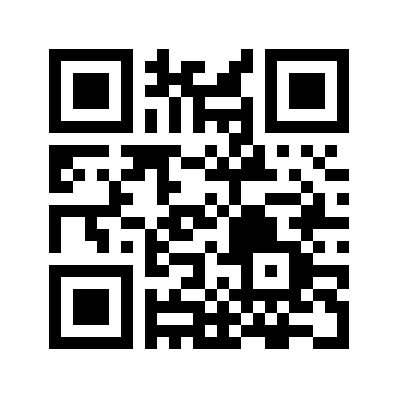
This multi-chat feature to can be used to make plans with groups of friends, or even to communicate with work colleagues during conferences, making sure you’re on the same page and fill those who aren’t there in, discretely. Sticking with the business theme, the QR codes can be used to add contacts quickly to a secure location at networking events, with profiles able to contain mobile/work numbers, email, twitter, addresses etc... Try adding me here if you’re on BBM by scanning the barcode (I may refuse you)!

On a social media level, this opens up a new channel for music artists and celebs that’s even more instant than facebook or twitter. Kiss FM have demonstrated this in their BBM Breakfast club, allowing fans of the station to engage more closely for exclusive news and competitions.

In the US, BBM has been embraced fully by celebrity culture, resulting in the recent “BBM Lounge Party” events being run in LA. The concept being that free VIP passes to the BBM Lounge Event (hosted by Research In Motion's BlackBerry and Xomad) are given away by scanning a BlackBerry barcode in, to enter a special group by a certain date. They select the winner at random. First 29 to enter are eligible to win VIP entry in “The BBM Lounge” embracing the instant nature of the BBM tool. The campaign kicked off in August 2010, with a party taking place each month. So far celebs have included, David Beckham, Neyo, Flo-Rida, Sean Kingston, Akon, Ryan Phillipe, and Mekhi Phifer.

With more than 25 million users of BBM, here’s an eye-opening stat to end on... During the final of the 2010 World Cup between the Netherlands and Spain, Spain’s Midfielder AndrĂ©s Iniesta scored the winning goal only three minutes before the end of extra-time, which as the lone goal of the match crowned Spain Champions of the tournament.  At the time of this exciting goal, that was viewed around the world, BlackBerry Messenger traffic increased immediately by 280% as virtual communities of fans shared their reactions through BBM!

So it looks like it is time to incorporate BBM into the marketing mix.

Thanks to David Jennings our guest blogger this week,